Details of the Target
General Information of Target
| Target ID | LDTP05771 | |||||
|---|---|---|---|---|---|---|
| Target Name | Replication protein A 30 kDa subunit (RPA4) | |||||
| Gene Name | RPA4 | |||||
| Gene ID | 29935 | |||||
| Synonyms |
Replication protein A 30 kDa subunit; RP-A p30; Replication factor A protein 4; RF-A protein 4 |
|||||
| 3D Structure | ||||||
| Sequence |
MSKSGFGSYGSISAADGASGGSDQLCERDATPAIKTQRPKVRIQDVVPCNVNQLLSSTVF
DPVFKVRGIIVSQVSIVGVIRGAEKASNHICYKIDDMTAKPIEARQWFGREKVKQVTPLS VGVYVKVFGILKCPTGTKSLEVLKIHVLEDMNEFTVHILETVNAHMMLDKARRDTTVESV PVSPSEVNDAGDNDESHRNFIQDEVLRLIHECPHQEGKSIHELRAQLCDLSVKAIKEAID YLTVEGHIYPTVDREHFKSAD |
|||||
| Target Bioclass |
Other
|
|||||
| Family |
Replication factor A protein 2 family
|
|||||
| Subcellular location |
Nucleus
|
|||||
| Function |
As part of the alternative replication protein A complex, aRPA, binds single-stranded DNA and probably plays a role in DNA repair. Compared to the RPA2-containing, canonical RPA complex, may not support chromosomal DNA replication and cell cycle progression through S-phase. The aRPA may not promote efficient priming by DNA polymerase alpha but could support DNA polymerase delta synthesis in the presence of PCNA and replication factor C (RFC), the dual incision/excision reaction of nucleotide excision repair and RAD51-dependent strand exchange.
|
|||||
| Uniprot ID | ||||||
| Ensemble ID | ||||||
| HGNC ID | ||||||
Probe(s) Labeling This Target
ABPP Probe
| Probe name | Structure | Binding Site(Ratio) | Interaction ID | Ref | |
|---|---|---|---|---|---|
|
DBIA Probe Info |
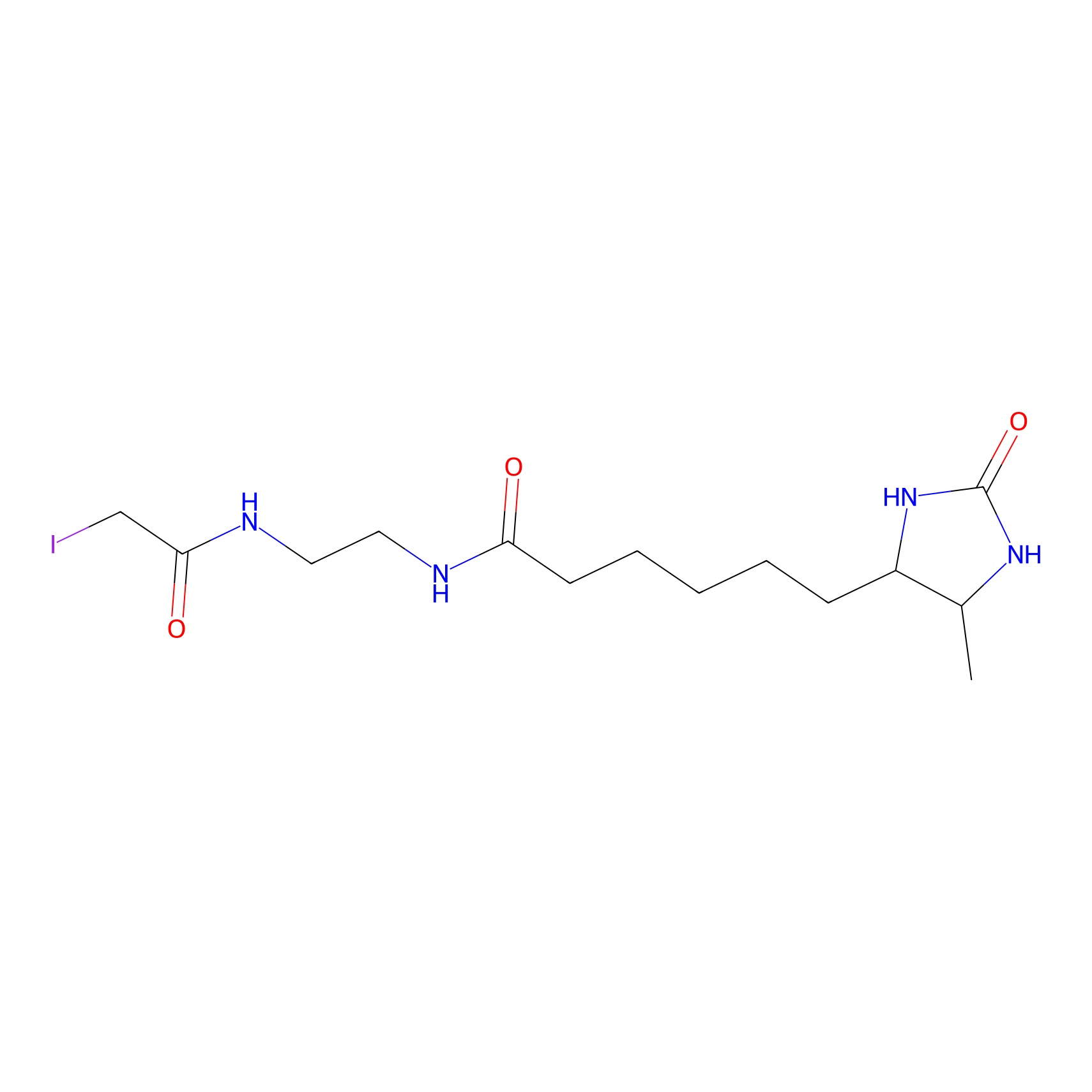 |
C212(1.09) | LDD2526 | [1] | |
Competitor(s) Related to This Target